
Building a Greener Future: Insights from the 2026 Eco Forum Global Guiyang
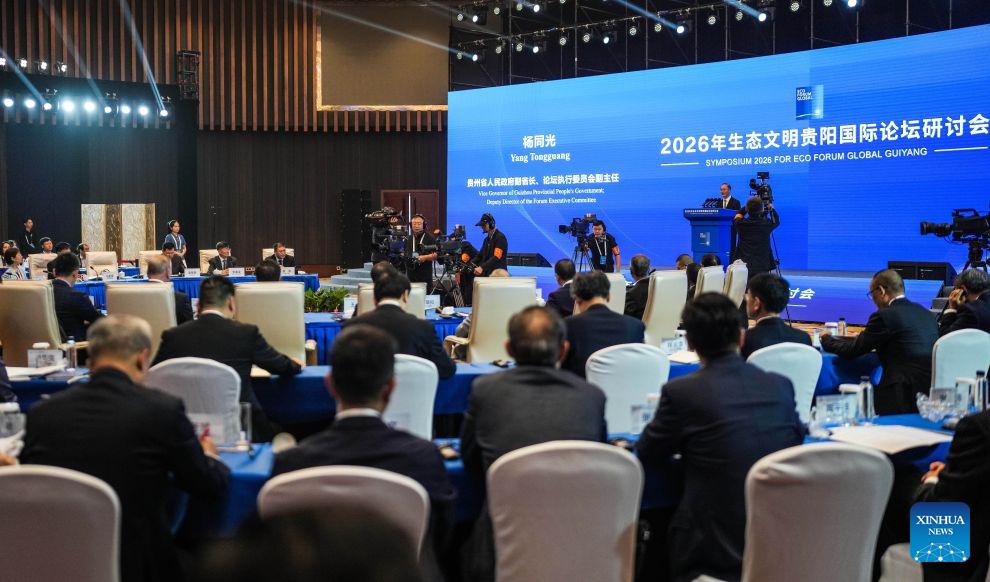
The conclusion of the Symposium 2026 for Eco Forum Global Guiyang marks a critical checkpoint in the ongoing transition toward sustainable economic development. As we move deeper into this decade, the dialogue around ecological civilization has shifted from purely theoretical debate to a practical, data-driven necessity. Bringing together experts in Guiyang this July 6th, the forum highlighted that the convergence of environmental policy and industrial strategy is no longer optional—it is the baseline for long-term fiscal and social stability.
When we talk about the scale of ecological transition, we are looking at massive capital expenditure and the reallocation of global resources. Currently, the global push toward carbon neutrality requires a compound annual growth rate of investment that many industries are only just beginning to grasp. The discussions at this symposium emphasize the need for a standardized framework for green finance and the implementation of circular economy models. By integrating advanced environmental monitoring systems and AI-driven resource management, firms can potentially optimize their energy efficiency by 25% to 30% within a five-year cycle. This isn't just about reducing emissions; it is about mitigating the physical and financial risks associated with climate volatility, which can otherwise cause production costs to spike by 10% to 15% due to supply chain disruptions.
The real challenge, and the focus of the solutions discussed, lies in scalability and regional cooperation. As highlighted by People's Daily, the ability to harmonize environmental standards across borders—or even across provincial jurisdictions—is essential for lowering the barrier to entry for green technologies. We need to move toward a model of "integrated compliance," where the cost of adherence to new environmental regulations is offset by the ROI of improved operational efficiency and reduced waste. Looking forward, the emphasis must remain on the precision of our metrics: as we track carbon footprints with greater accuracy, from the current ±5% margin of error to below 1%, we will gain the granular data needed to make smarter, high-impact investments. This symposium serves as a reminder that the path to a sustainable future is paved with rigorous analysis, strategic partnerships, and a relentless focus on lowering the cost of green innovation.
News source: https://peoplesdaily.pdnews.cn/china/er/30052581872